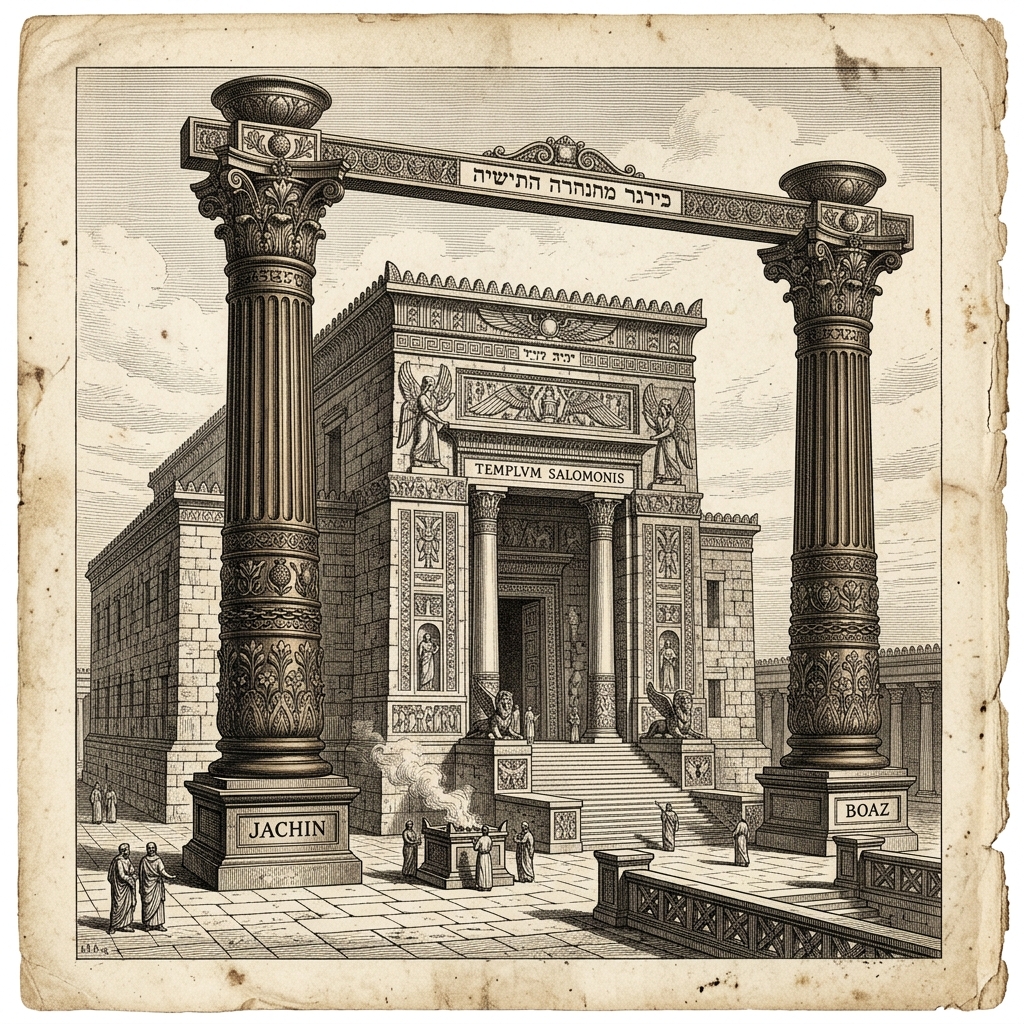
When reading the architectural blueprints of 1 Kings, it is easy to gloss over the names **Jachin and Boaz**. These two massive, intricately decorated bronze pillars stood at the entrance of Solomon's Temple. While scholars debate the exact etymological origins of the names—some suggesting "He shall establish" and "In Him is strength"—their theological function within ancient Israel was undeniable.
In the ancient Near East, kings routinely built massive monuments to celebrate their own military conquests, wealth, or political alliances. But Solomon's Temple intentionally subverted this narrative. As the Israelites gathered at the temple, they were confronted by these towering pillars. They stood as a permanent, physical sermon declaring that the security of the nation did not rest on the genius of their king, the strength of their chariots, or their treaties with Egypt, but solely on the covenantal faithfulness of God.
This architectural sermon is a direct indictment of the political tribalism and anxiety that plagues the modern church. When Christians place their ultimate hope for the future in the outcome of an election, the passage of a law, or the strength of an economy, we are attempting to carve our own names into the pillars. Jachin and Boaz demand that we strip away the illusion of human control. True stability has never been found in the empires of men; it is established by God alone.