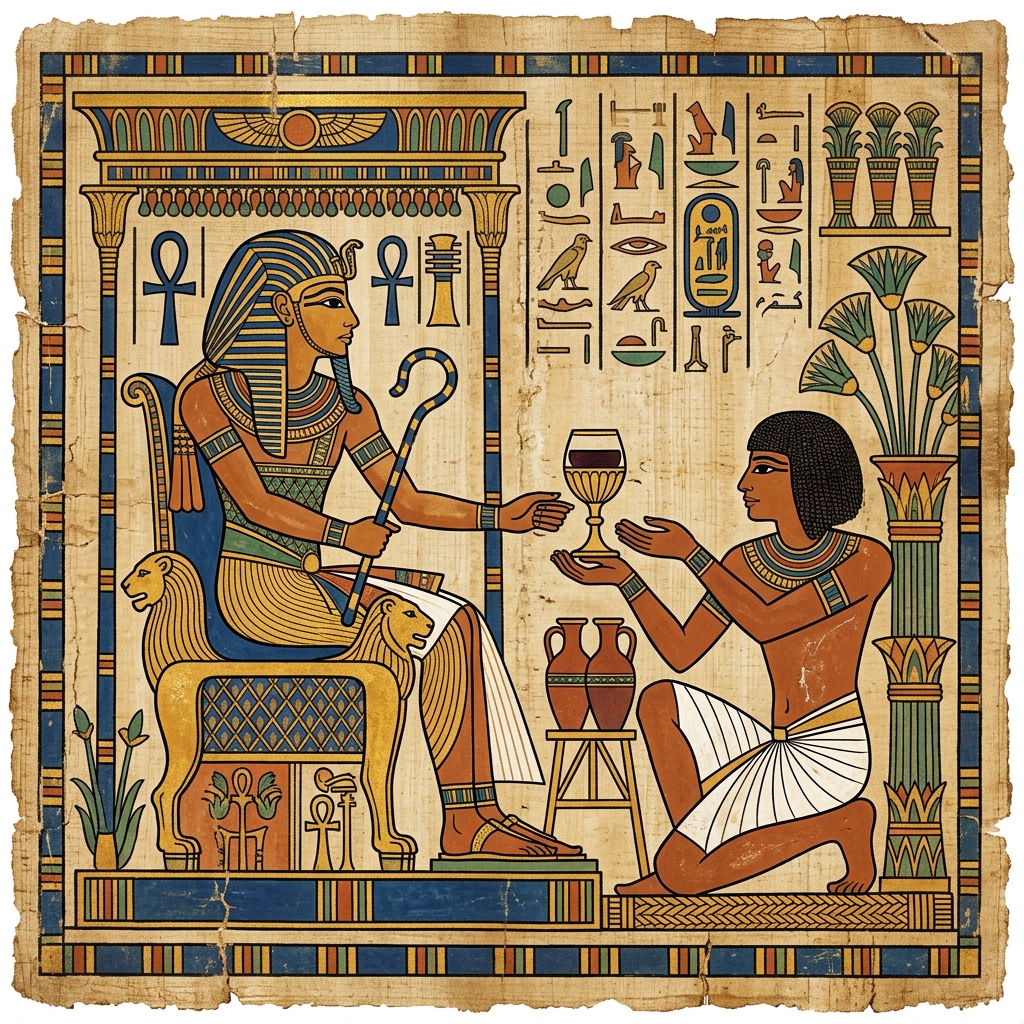
When modern readers encounter the story of Joseph interpreting the dream of Pharaoh's **Butler** in Genesis 40, they often picture a lowly domestic servant serving drinks. This cultural mistranslation severely diminishes the political weight of the narrative. In the ancient Near East, the "cupbearer" was an immensely powerful, wealthy, and trusted political official.
Because poisoning was the preferred method of royal assassination, the man who handed the king his cup held the king's life in his hands every single day. The cupbearer had to be an intimate confidant and trusted advisor, often functioning as a high-level political operative or chief of staff (a reality we see clearly later with Nehemiah in the Persian court). Understanding this massive political influence explains why the cupbearer's eventual recommendation of Joseph instantly elevated a Hebrew prisoner from a dungeon to the second-highest seat in the Egyptian empire. It wasn’t a waiter dropping a name; it was a top-tier political advisor vouching for Joseph’s supreme wisdom.
This historical context provides a breathtaking view of God's providence. Joseph spent two years forgotten in a dark prison, completely unaware that he had just secured a political favor from a man who held the ear of the most powerful monarch on earth. God was maneuvering massive geopolitical pieces on a board Joseph could not see. It is a profound reminder that God uses our faithfulness in the darkest, most obscure "dungeons" of our lives as the exact instruments for our future deliverance.