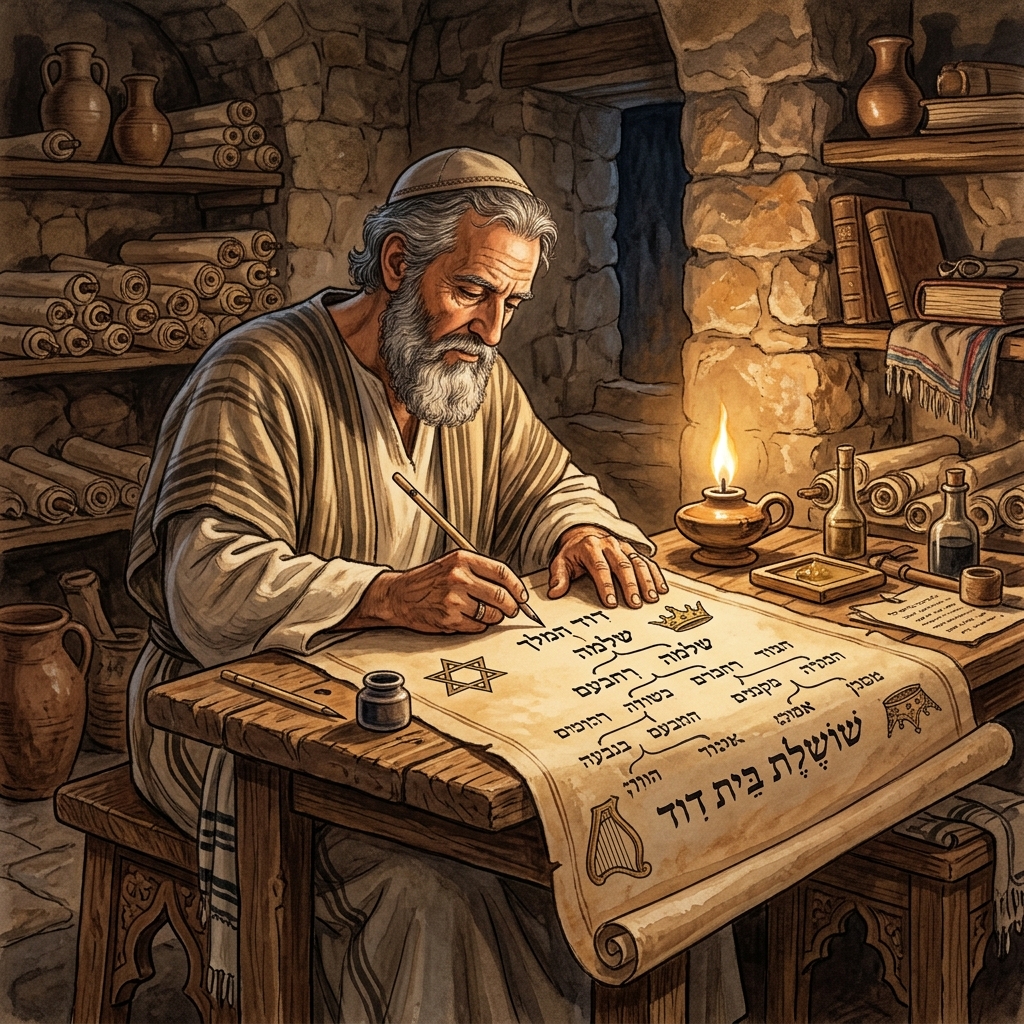
For many modern readers, encountering a chapter filled with ancient names—like Genesis 5, 1 Chronicles 1-9, or Matthew 1—is a signal to flip the page. We view genealogies as dry, archaic record-keeping. But to ancient Israelites and early Christians, genealogies were intensely dynamic documents carrying immense theological, legal, and social weight.
Understanding how ancient Hebrew genealogies functioned reveals why biblical writers preserved them so meticulously, why Matthew and Luke present different genealogies for Jesus, and how family trees served as legal land deeds in the ancient Near East.
1. Genealogies as Legal Land Deeds and Tribal Identity
In ancient Israel, land was not bought and sold on an open real estate market as it is today. Under the Torah, land was assigned by God to specific tribes and families as an eternal inheritance (Joshua 13-21). If a family fell into poverty and sold their land, the property legally returned to the original family during the Jubilee year (Leviticus 25).
Therefore, a family's genealogy was their physical land title. Proving your lineage back to a specific ancestor established your legal right to farm a plot of ancestral soil, serve in the Temple priesthood, or claim citizenship in a city like Gibeon or Bethlehem.
2. Fluidity and "Skipping" Generations
Modern Western genealogies demand strict chronological recording: every father, son, grandson, and great-grandson must be listed sequentially. Ancient Near Eastern genealogies operated differently. Scribes routinely telescoping (skipped) lesser-known or insignificant generations to focus on key historical figures or to structure genealogies symmetrically.
In Hebrew, the word for "father" (*ab*) can mean biological father, grandfather, or distant ancestor. Similarly, "son of" (*ben*) frequently means descendant. For example, when Jesus is called the "Son of David," no ancient reader assumed David was his immediate biological father; it meant he belonged to David's royal lineage. Matthew's genealogy of Jesus explicitly structures the lineage into three groups of 14 generations (Matthew 1:17) to create a memorable, symbolic framework highlighting the Davidic covenant.
3. Matthew vs. Luke: Two Royal Lineages
One of the most famous theological questions centers on why Matthew 1 and Luke 3 present different genealogies for Jesus:
- Matthew's Genealogy: Traces Jesus' lineage forward from Abraham through Solomon down to Joseph. Writing for a Jewish audience, Matthew presents the **legal royal lineage** through Joseph, proving Jesus' legal right to the throne of David as Joseph's adopted son.
- Luke's Genealogy: Traces Jesus' lineage backward from Joseph (or Mary's father Eli) all the way to Adam and God. Writing for a Gentile audience, Luke highlights Jesus' **biological lineage** as the Universal Savior connected to all humanity.
4. Preservation After the Exile
When the Jewish people returned from Babylonian exile in 538 BC, genealogies became a matter of national survival. Books like Ezra, Nehemiah, and 1 Chronicles dedicated extensive chapters to genealogies to re-establish who was qualified to serve as High Priest, who belonged to the tribe of Judah, and who owned what land.
By understanding ancient genealogies, the long lists of names cease to be boring clutter. They stand as enduring evidence of God's covenantal faithfulness, tracing the unbroken promise of salvation across thousands of years of human history.