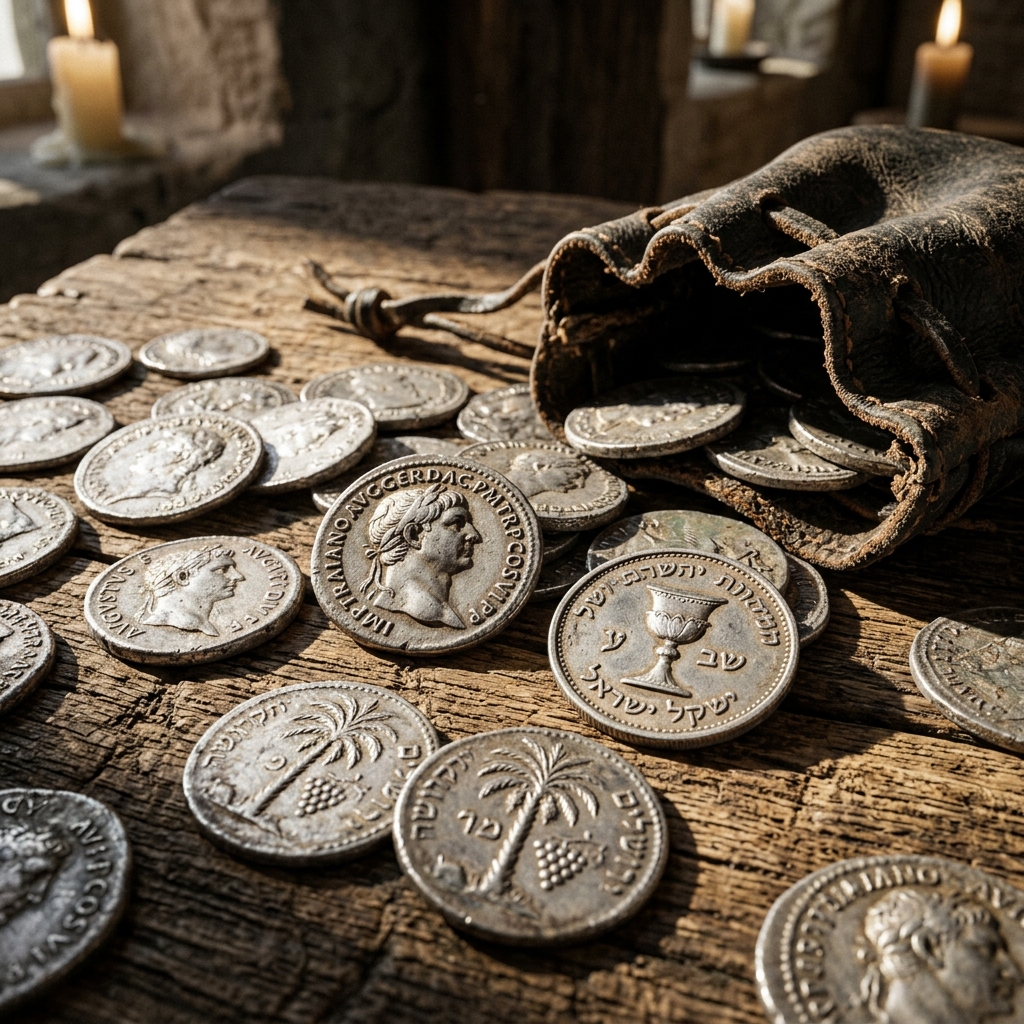
When the Pharisees and Herodians approached Jesus in Matthew 22 to ask if it was lawful to pay **Tribute** to Caesar, they were not initiating a theoretical debate about tax policy. They were springing a lethal trap. In the ancient Roman world, tribute was a crushing, forced exaction laid upon conquered nations. It was a daily, physical reminder of total subjugation. For the zealous Jews, paying this tax using a coin that bore the image of Tiberius Caesar (claiming to be the "son of the divine") was an act of idolatry and treason against Yahweh.
The mechanics of the trap were perfect: If Jesus said "yes, pay the tax," he would instantly alienate the Jewish masses who despised the Roman occupation. If he said "no," the Herodians would immediately report him to the Roman governor for inciting armed rebellion, resulting in swift execution.
The Image on the Coin
Jesus' response—"Render to Caesar the things that are Caesar's, and to God the things that are God's"—is widely recognized as a masterful evasion, but its theological weight is often missed. By asking them to produce the coin, Jesus forced them to acknowledge that it bore Caesar's image. Caesar had stamped his face on the metal, so the metal belonged to him. But the unspoken, devastating implication was aimed directly at the human heart: What bears the image of God?
According to Genesis, humanity bears the *Imago Dei*. Caesar has every right to demand his metal back, but he has absolutely no right to demand the souls of men. When modern political ideologies demand our absolute, unquestioning loyalty, or when the state attempts to usurp the role of the church, this ancient interaction serves as our boundary line. We fulfill our civic duties, but our ultimate devotion, our conscience, and our worship belong exclusively to the One whose image is stamped upon us.