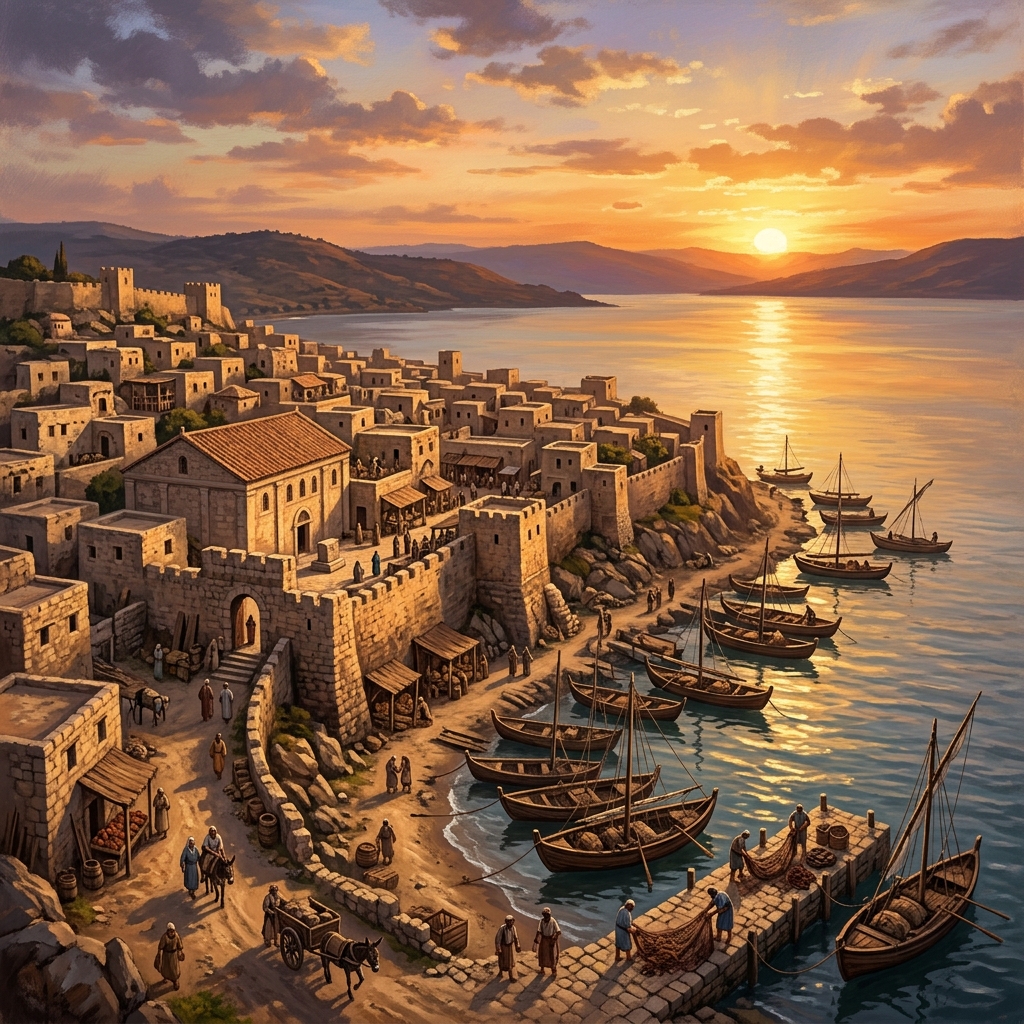
For centuries, Western tradition (heavily influenced by Pope Gregory I in the 6th century) wrongly conflated Mary Magdalene with the unnamed sinful woman in Luke 7. This created a persistent myth of Mary as a destitute, repentant prostitute. But her surname—indicating she was from **Magdala**—tells a completely different and far more historically accurate story.
Located on the western shore of the Sea of Galilee, Magdala (Taricheae in Greek) was a wealthy, bustling commercial center famous across the Roman Empire for its salted fish industry. It was a hub of wealth, trade, and Hellenistic influence. By identifying her as "Mary of Magdala," Luke is signaling her status. According to Luke 8:1-3, Mary and several other women provided for Jesus’ ministry "out of their own means." Mary was not a street woman; she was a wealthy patroness from a prosperous urban center who financially underwrote the ministry of Christ.
This historical correction is vital because the modern church often unconsciously romanticizes poverty while harboring deep suspicion toward wealth. We assume that true spirituality is the exclusive domain of the impoverished fishermen like Peter. But the Kingdom of God required—and still requires—the capital of the Magdalan merchant class. The Gospel bridged the massive social gap between the rural poor of Nazareth and the urban wealth of Magdala. True Kingdom impact requires believers who are willing to leverage massive financial success for the sake of the Gospel, following Christ not just with their hearts, but with their balance sheets.