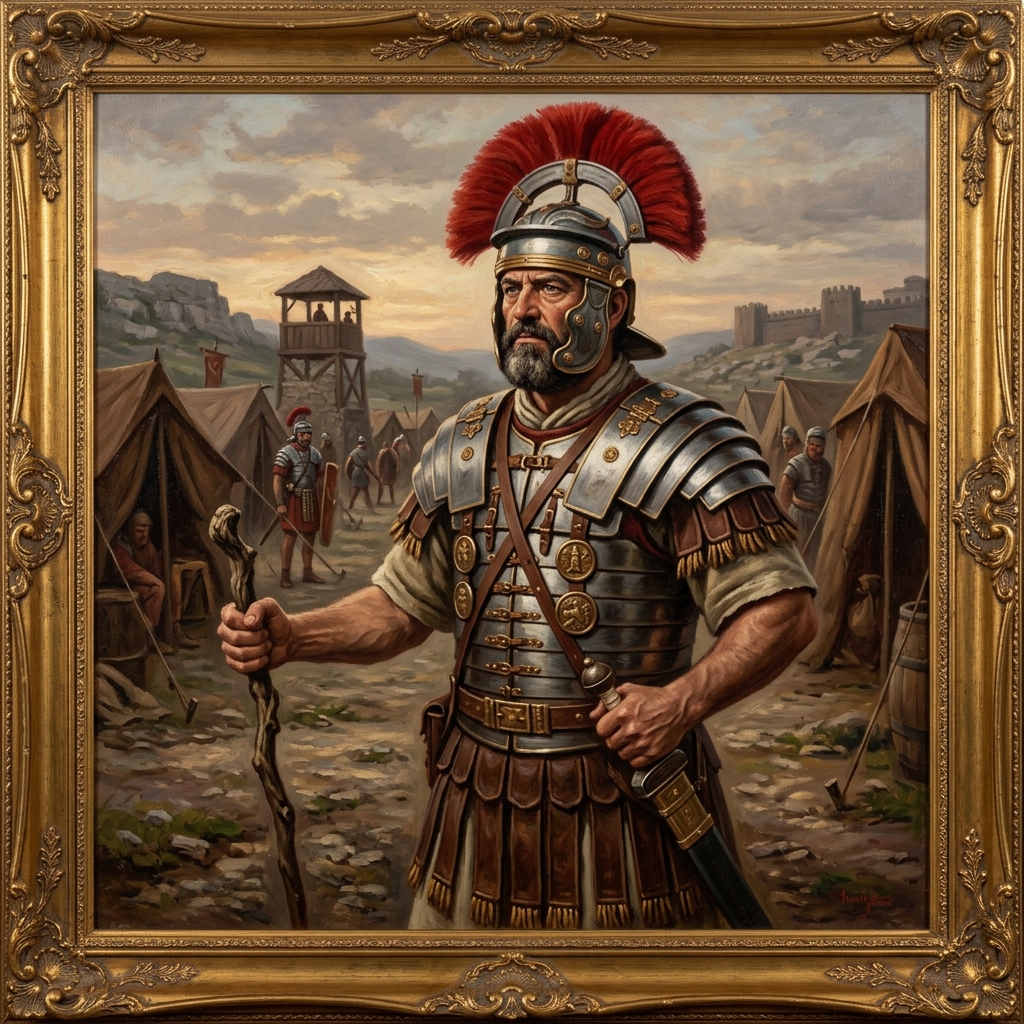
When reading about the Roman military presence in the New Testament, one military rank appears far more frequently than any other: the centurion. From the officer who asked Jesus to heal his servant in Capernaum, to the soldier standing guard at the crucifixion, to Cornelius the first Gentile convert in Caesarea, Roman centurions play surprisingly prominent and positive roles in the biblical narrative.
Understanding who centurions were, how they rose to power, and what authority they commanded reveals why their encounters with Jesus and the apostles carried such profound theological significance.
The Backbone of the Roman Legion
A Roman legion was composed of approximately 5,000 heavy infantry soldiers, divided into ten cohorts. Each cohort was further subdivided into centuries. Despite the root word *centuria* (meaning 100), a standard Roman century typically comprised 80 battle-hardened legionaries. Each century was commanded by a centurion.
Unlike aristocratic Roman tribunes or legates who received military appointments based on political connections, centurions were professional career officers who rose through the ranks strictly on merit, combat leadership, and iron discipline. Historian Polybius noted that Rome selected centurions not for their reckless bravado, but for being steady, calm under pressure, and willing to hold their ground to the death.
Authority, Uniform, and Pay
Centurions were visually striking on the battlefield. A centurion wore a transverse crested helmet (feathers or horsehair running side-to-side so his men could spot him in the chaos of battle), greaves protecting his shins, and a short vine staff (*vitis*). The vine staff was not merely decorative; it was a formal symbol of disciplinary authority used to administer physical corporal punishment to disobedient soldiers.
Centurions were paid substantially higher wages than common legionaries—often 15 to 30 times a private's pay. This allowed centurions to retire as wealthy landowners and respected civic leaders, enjoying significant social standing in Roman colonies across Judea and Syria.
Why Centurions Stand Out in the New Testament
Given the intense Jewish hatred for Roman military occupation, it is remarkable how favorably centurions are portrayed in scripture:
- The Centurion of Capernaum (Matthew 8:5-13): This officer demonstrated such profound understanding of authority that Jesus praised him, saying, "I have not found anyone in Israel with such great faith." The centurion famously recognized that just as he gave orders to his soldiers and they obeyed, Jesus held absolute authority over disease.
- The Centurion at the Cross (Mark 15:39): Standing directly in front of the cross, watching how Jesus suffered and died, the commanding centurion uttered one of the most pivotal confessions in scripture: "Surely this man was the Son of God!"
- Cornelius of Caesarea (Acts 10): Described as a devout, God-fearing man who gave generously to the poor, Cornelius was chosen by God to be the first Gentile convert baptized into the early Christian church by Peter.
- Julius the Centurion (Acts 27): Tasked with escorting Paul to Rome as a prisoner, Julius treated Paul with exceptional kindness, granting him liberty to see friends in Sidon and saving Paul's life during the shipwreck on Malta.
The Paradox of Faith and Power
Why did the Gospel writers highlight these Roman military officers? Centurions represented the ultimate embodiment of earthly imperial power and authority. By showing these hardened soldiers bowing before the spiritual authority of Jesus, the New Testament demonstrated that the Kingdom of God transcends military might, national borders, and human rank.