When modern readers hear the phrase "Good Samaritan," they picture a charitable person or a law protecting helpful bystanders. But to a first-century Jew living in Judea or Galilee, the term "Samaritan" was an oxymoron. Samaritans were viewed not merely as foreigners, but as religious apostates and dangerous ethnic enemies. To understand the radical nature of Jesus' teachings—including his encounter with the woman at the well and the parable of the Good Samaritan—we must unearth the 700-year feud that divided these neighboring peoples.
The Origins of the Divide: The Assyrian Conquest
The rift between Jews and Samaritans began in 722 BC when the Neo-Assyrian Empire conquered the Northern Kingdom of Israel. As was standard imperial policy, the Assyrians deported the elite Jewish population of Samaria and replaced them with pagan colonists from Babylon, Cuthah, and Avva (2 Kings 17:24). Over generations, these foreign settlers intermarried with the remaining northern Israelites, blending Yahwistic worship with pagan customs.
When the southern kingdom of Judah returned from Babylonian exile centuries later under Zerubbabel and Nehemiah, the Samaritans offered to help rebuild the Temple in Jerusalem. The Jewish leaders flatly rejected their assistance (Ezra 4:1-3), viewing them as religiously impure half-breeds. This rejection turned underlying tension into permanent hostility.
Mount Gerizim vs. Mount Zion
Frustrated by Jerusalem's rejection, the Samaritans established their own religious nerve center on Mount Gerizim near Shechem, erecting a rival temple around 330 BC. They claimed Mount Gerizim—not Jerusalem—was the true sacred mountain chosen by God during the time of Moses.
Theologically, the Samaritans rejected the entire Old Testament except for their own version of the Torah (the Samaritan Pentateuch). They denied the authority of the Psalms, the Prophets, and the Davidic covenant. In 110 BC, Jewish Hasmonean king John Hyrcanus marched north and burned the Samaritan temple on Mount Gerizim to the ground. By the time Jesus was born, the animosity was blood-deep; Jewish travelers routinely added days to their journeys just to bypass Samaritan territory.
Jesus and the Samaritan Scandals
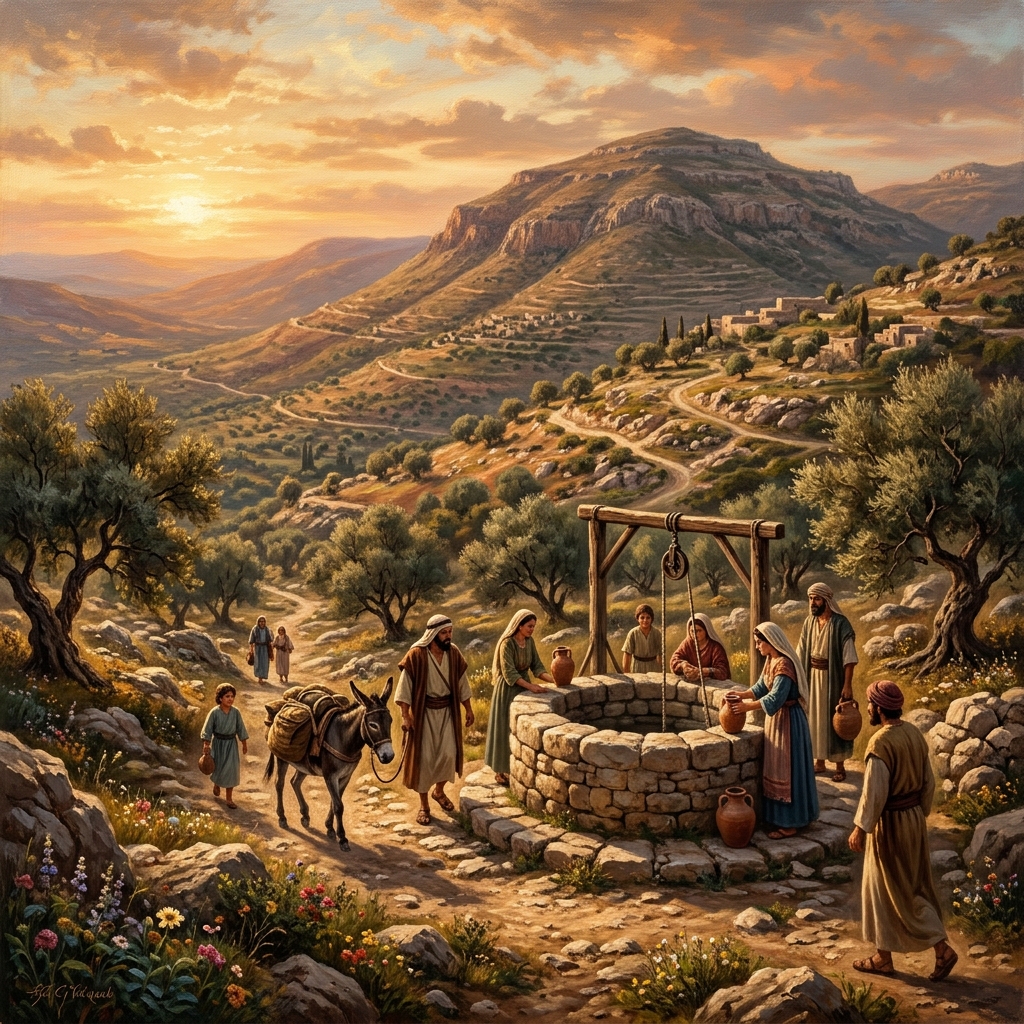
This historical backdrop transforms how we read the Gospels. When Jesus deliberately travelled through Samaria and struck up a conversation with the Samaritan woman at Jacob's well (John 4), he broke three massive cultural taboos simultaneously: speaking to a woman in public, engaging a Samaritan, and discussing theology with someone viewed as a heretic. When she asked whether worship should occur on Mount Gerizim or in Jerusalem, she was referencing centuries of bitter warfare.
Similarly, when Jesus told the Parable of the Good Samaritan (Luke 10:25-37), his listeners expected the hero to be a Jewish priest or a Levite. Introducing a Samaritan as the embodiment of neighborly love was a deliberate theological shock. Jesus demonstrated that mercy and obedience to God supersede ethnic borders and religious elitism.